Salvator Rosa
Italian, 1615–1673
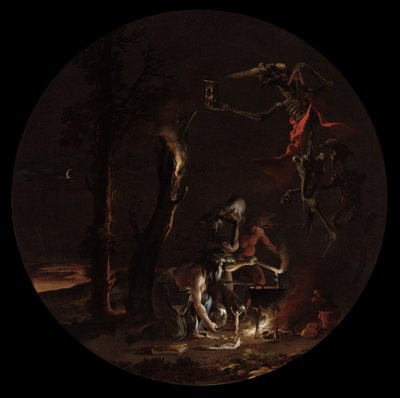
Scenes of Witchcraft: Evening, c. 1645–49
Oil on canvas
The Cleveland Museum of Art
Purchase from the J. H. Wade Fund
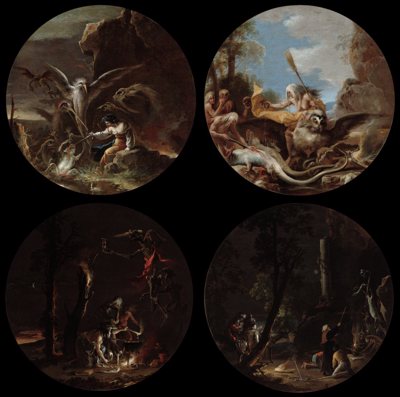
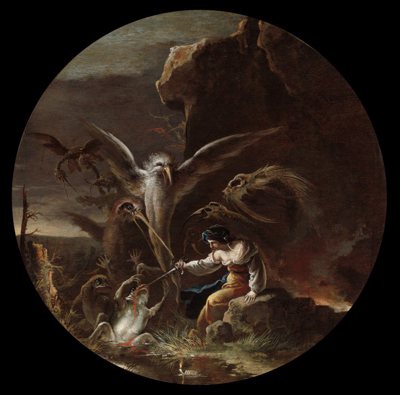
At dusk, Rosa's hags gather around a cauldron. Above their incantations soars a conjured skeleton holding an hourglass symbolizing the brevity of life. In its left hand, the demonic creature holds a capital letter A from which extends a plumb line; as ancient signs of the moon and judgment, this strange combination of symbols embodies the nocturnal judgment the witches are doling out below. Though more rare in paint, the detailed portrayal of witches at their spells enjoyed a long literary tradition. The wax effigy alludes to classical literature by Virgil and Horace that described love magic. Poets in the 1500s and 1600s continued the tradition, writing verse about witches concocting potions and performing love spells. In Rosa's own poem "La Strega (The Witch)," the jilted Phyllis vows to take revenge on her feeble lover, listing the ingredients for her black magic: "ground powders, mystic gems, snakes and owls, stinking blood. . . ." Painting was considered "mute poetry" in the 1600s, and Rosa often explored the same themes in his written and painted art—a clever way to gain fame as a unique intellect.
The colours it's made of
Choose a colour to find other works that are full of it.