Rembrandt van Rijn
Dutch, 1606–1669
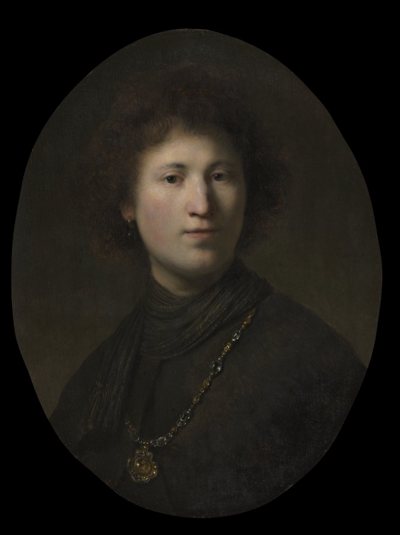
A Young Man with a Chain, c. 1629 or 1632
Oil on wood
57.8 × 43.8 cm (22 ¾ × 17 ¼ in.)
The Cleveland Museum of Art
Bequest of John L. Severance
This painting is an example of a tronie, a Dutch word meaning “head” or “facial expression.” Tronies were not intended to be identifiable portraits, but artistic investigations of facial appearance and fanciful costume. Particularly in the years around 1630, Rembrandt used this popular format to explore different lighting effects and facial expressions. Here, the strong contrast of light and shade shapes the contours of the young man’s face; unusual accessories such as the striped scarf and glittering pendant on a jeweled chain add an exotic touch. Although this painting bears Rembrandt’s monogram, the authorship is not certain. Some scholars have attributed it to Isaac de Joudreville (1613–1648), a pupil and associate of Rembrandt who painted comparable tronies in a similarly smooth and elegant style.
The colours it's made of
Choose a colour to find other works that are full of it.